
Cuyahoga Land Bank’s 2025 Year in Review
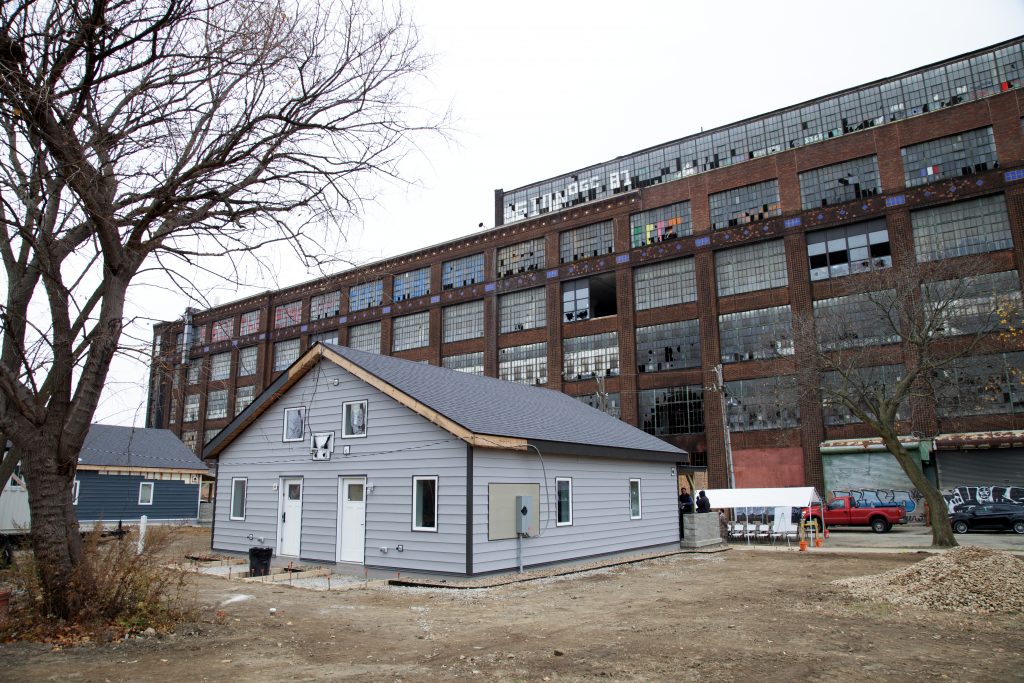
Last year was a big year for Cuyahoga Land Bank and a milestone year for some of the region’s largest and most beleaguered housing and development projects.
In 2025 patience paid off for a number of projects – seemingly forever stuck in the planning, design or funding stage, explains Cuyahoga Land Bank executive director Richard Leon.
The demolition of a former EPA superfund site on the city’s East Side, the completion of gap funding for a 100-year-old factory in Cleveland’s Midtown and – after years of court hearings – the transfer of a tax-burdened synagogue in Cleveland Heights, he said, are just some of the significant progress we saw in 2025.
“Sometimes, it takes a while before we see shovels in the ground on an anticipated project,” León added. “But if you look at the work that happened in 2025, there are a lot of different shovels that represent so many different partners all working together to bring these plans to life.”
Last year substantial progress was also made on the massive “core-to-shores” plan for Cleveland’s lakefront transformation. And also in 2025, Cleveland passed measures to help fund and assemble commercial land development and Cuyahoga County worked on bespoke zoning and development reform.
Discussions around the need for more affordable housing continued. In 2025, the Land Bank worked along side a group of business, government and philanthropic partners to help craft a pair of strategic funding models aimed at constructing and renovation more housing. The unique programs – focused on the region’s distressed neighborhoods – already have projects in the works and are designed to help remake the housing market over the next few decades.
“There continues to be a push for housing that’s affordable, flexible in neighborhoods where a lack of investment has allowed the market to atrophy,” León said. “In 2025, the Land Bank worked with two new housing funds created to provide significant support for large projects over the next few decades. It has been a great experience for the Land Bank to be part of projects that meet the need of residents on sites that have long been vacant or blighted.”
Here are 12 of the most significant housing, development and Cuyahoga Land Bank-related stories of 2025.
1. As expected, 2025 brought with it notable demolition, remediation and renovation projects. Whether you call it the old Medical Mutual or Project Scarlet, the renovation of Downtown’s Rose Building was one of the most exciting projects of 2025. Nearly $2.5 million in state brownfield funding from the Land Bank was awarded to help the $120 million transformation of the former offices to a 123-room Marriott hotel with high-end restaurant. And in the works, at the corner of East Ninth Street and Prospect Avenue, are 154 apartment units and office space.
On the other side of the Cuyahoga River, an impressive and exhaustive list of civic and philanthropic partners including the Port of Cleveland, Cleveland Metroparks and state, federal EPA finished the bulk of the infrastructure build out for Irishtown Bend. The $65 million hill stabilization plan included the removal of more than 230,000 cubic yards of dirt and multiple tons of discarded tires and the construction of a 2,300 foot retaining wall. Plans now move ahead for a 25-acre park with an amphitheater, cafe and path leading to trails along the Lake Erie shore.
3. The final gap has been filled in the complex, multi-year effort to raise $64 million in redevelopment costs associated with Cleveland Midtown’s Warner & Swasey Building. Construction and demo work is set to begin in early 2026 on the more than 100-year-old building at the corner of E. 55th and Carnegie Avenue. The hulking factory that once produced telescopes, lathes and eventually military equipment has weathered the elements for the better part of four decades. The project’s complex capital stack, accumulated over years, will be used to build out 112, one- and two-bedroom affordable apartment units that are set to be available in 2028. The unique investment mix includes both federal and state historic, as well as, low-income housing tax credits, city of Cleveland federal stimulus, philanthropic and private funding along with construction material sales tax savings via a Port of Cleveland loan.
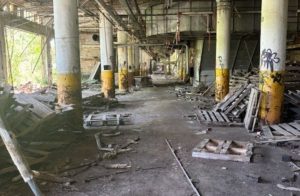 4. In the Spring, the Land Bank celebrated the total demolition of the former National Acme building on Cleveland’s East Side. The $11 million project opens up 37 acres of land when combined with a Land Bank remediated-former Republic Steel property, making it one of the largest sites available for commercial development in Cleveland. The city, in an effort to assemble larger commercial properties for development, committed one-time federal dollars to funds managed by two well-funded philanthropic organizations. The Cleveland Foundation announced it will invest and grow $50 million in federal stimulus money for the city’s Site Readiness program aimed at assembling land for future development. Also, Local Initiatives Support Corporation (LISC) partnered with the city on the Cleveland Housing Investment Fund (CHIF) for a $100 million community investment funding vehicle. Both funds, launched in 2025, are supporting projects on the city’s central and West Side with “shovels in the ground” where the Land Bank has donated properties or funding.
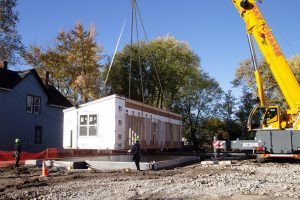 5. Cheap, fast and good. Cities and counties across the country are in search of a way to build affordable, quality housing quickly. Higher construction materials and labor costs combined with skilled worker shortages have exacerbated already insufficient housing inventories, necessitating a host of interesting innovations. In 2025, the Land Bank partnered with the city of Cleveland, Habitat for Humanity and Lutheran Metropolitan Ministry in piloting programs aimed at demonstrating that 3-D printing, off-site panel prefabrication and modular-style housing construction can make homes available faster and cheaper than traditional construction. In 2025, modular, prefab solar housing and concrete “printed” homes went up in the traditionally disinvested neighborhoods across Cleveland. Next year could see one of these pilots made permanent as the city and other organizations are looking to invest in one of these companies for the long term.
6. The State of Ohio funded a third round of a popular housing grant program that has helped build 440 owner-occupied, single-family homes throughout the state. Columbus appropriated $200 million over two years to make homes more affordable through the Welcome Home Ohio program. The program provides up to $100,000 per property for Land Banks to purchase homes at foreclosure. Funds are also eligible for rehabilitating or new construction of single- or multi-unit housing. In 2025, the program added tax credits to the mix, offering eligible developers’ savings on rehab and new construction projects after a property is sold.
8.In the fall of 2025, Cuyahoga Land Bank rolled out a new grant program created specifically for the suburbs in need, outside of the city of Cleveland. The Land Bank’s Municipal Gap Grant program supports new construction in emerging markets across Cuyahoga County. The nascent program grants up to $35,000 per unit for both new single-family homes and townhomes and projects are set to become public in early 2026.
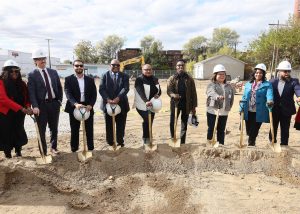 9. Cleveland is “All In” when it comes to strengthening the city’s housing stock, recreation centers and public parks in 2025. Mayor Justin Bibb’s administration partnered with the Land Bank on a variety of initiatives during the last year of his first term. They include a “Home for Every Neighbor” initiative, a citywide Parks and Recreation masterplan and his signature Southeast Side Promise. With the help of the Land Bank, three significant home renovations in select neighborhoods on the southeast side began in 2025. Simultaneously, a city gap grant program designed to incentivize outside investors to renovate homes and sell them to owner-occupants in “tipping point” communities across the city was launched. The Cleveland Parks and Recreation Plan marks the first time in more than 40 years a comprehensive guide based on recommendations will provide a road map guiding policy, maintenance, physical improvements, programming, and funding for the 161 parks and 22 recreation facilities, totaling 1,600 acres of parks and recreation.
10. In 2025, the Cuyahoga County Planning and Zoning department released the findings of a Countywide Housing study. Conducted by the Levin College of Public Affairs and Education at Cleveland State University, the study provides a guide to housing policies and priorities. It was commissioned by the County’s Department of Housing and Community Development and uses 36 in-depth interviews regarding housing profiles in each city. That report along with a Cuyahoga County Planning Commission report, found that the confusing collection of zoning codes are barriers to redeveloping about 5,300 vacant, single-family zoned lots in the county’s First Suburbs. Working with the data from both county reports, recommended changes were applied to Land Bank properties eligible for tax abatements in hopes making it easier to build “infill” housing for a pilot program in the city of South Euclid.
11. The year 2025 saw milestone developments for two high-profile projects on the East Side. In Cleveland Heights, the Land Bank helped resolve $7.2 million in liens against the historic Taylor Road Synagogue, considered at the time the most tax-delinquent property in Cuyahoga County. The property caps off a plan to revitalize the Tudor commercial district into an arts hub with more than 11,000 square feet of commercial space, 44 apartments and eight live-work units slated for artists. Further east, the remediation of the 28.5-acre Euclid Beach Mobile Home Park, perched on the shores of Lake Erie, was completed. The mobile park property built in 1980, will now be turned over to Cleveland Metroparks and redeveloped as a green space accessible to the public.
12. Last year the first steps in the multi-phase Circle East District (CED) project began. Plans around CED new home construction, renovations on existing homes and the buildout of green space were announced in 2025. The 30-acre community project which includes a mix of housing types, all equipped with modern amenities, such as rooftop solar panels and electric vehicle chargers, began in earnest with a renovated home ribbon cutting in late 2025. Along with the home renovation, the Land Bank awarded grants averaging $10,000 to long-time homeowners to help with needed home repairs.
