
Maximizing Impact: How a Multi-Tool Land Banking Approach Transforms Communities
At Cuyahoga Land Bank, no two properties are the same – and neither are the solutions required to bring them back to productive use. From complex environmental cleanups to neighborhood revitalization and large-scale redevelopment, our land banking success often results from deploying multiple tools in tandem to unlock a property’s full potential.
This multi-tool approach is at the core of how we create lasting economic impact across Cuyahoga County. By combining acquisition strategies, title work, demolition, environmental remediation, and strategic partnerships, we’re able to move properties from distressed and dormant to vibrant and valuable.
Here are a few recent projects that demonstrate how this approach works in action.
Reimagining Euclid Beach: From Mobile Home Community to Public Greenspace
The transformation of the former Euclid Beach Mobile Home Community is a powerful example of collaboration paired with a comprehensive toolkit.
Working alongside the Western Reserve Land Conservancy and with facilitation from Cleveland City Councilman Michael Polensek, the Land Bank played a central role in repositioning this lakefront property for public benefit. The project required a layered approach: accepting property through deed in lieu of tax foreclosure, clearing complex title issues, holding the land tax exempt, and ultimately overseeing demolition.
“The Land Bank was an exceptional partner in the Euclid Beach Transformation project,” Western Reserve Land Conservancy’s Chief Urban Program Officer, Isaac Robb said. “From participating in land use planning to helping navigate complex legal and environmental challenges, their team brought both deep expertise and a solutions-oriented mindset. The tools they bring to any project are remarkable: legal help with challenging title issues, real estate and tax expertise, not to mention housing accommodations, and demolition was critical in moving the project forward. Just as important was the professionalism and genuine compassion they bring to their work, ensuring that the process remained grounded in community impact.”
The process was anything but simple. More than 100 occupied mobile homes were located on the site, requiring careful coordination and compassion. Residents were successfully relocated with the help of Realty Reimagined, ensuring a people-first approach throughout the transition.
From there, the Land Bank managed demolition and tackled the unique legal hurdles tied to mobile homes.
“Mobile homes are treated as vehicles,” Land Bank Director of Acquisition & Disposition Kim Steigerwald said. “So, on top of clearing the taxes, we had to go to the BMV to transfer the titles into our name so that we could demolish the mobile homes.”
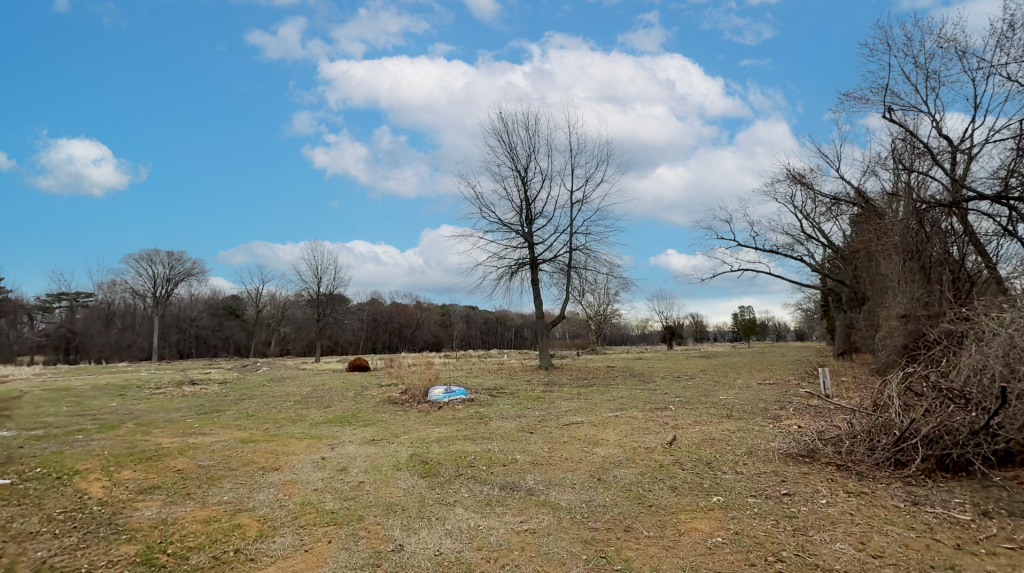
After clearing the site and holding it tax exempt, the property was transferred back to the Western Reserve Land Conservancy and ultimately to the Cleveland Metroparks. The result is a once-inaccessible stretch of land now poised to become a major recreational asset.
“It would appear that Euclid Beach Park could become the Eastside Edgewater,” Steigerwald noted. “The more recreation space you have for people, the healthier it is for them.”
Building Opportunity: Westinghouse Electric Site Assembly
At 2175 Ashland Road in Cleveland, the Land Bank’s multi-tool approach is helping lay the groundwork for future job creation.
This long-vacant, tax-delinquent industrial property had gone through foreclosure and multiple unsuccessful sheriff sales before the Land Bank acquired it on behalf of Cleveland’s Site Readiness Fund (SRF). Using acquisition from forfeiture and a tax-exempt hold, the Land Bank stabilized the site while a broader redevelopment vision took shape.
The strategy didn’t stop at a single parcel. Through coordinated efforts, additional nearby properties on Longfellow, Thackery, and Hawthorne were assembled, which created a contiguous site of more than 10 acres.
Environmental challenges remain, but the Land Bank is addressing them head-on. “This was one of the first sites we acquired for the Site Readiness Fund,” Steigerwald said. “We applied for a U.S. EPA cleanup grant for more than $1 million that would allow us to clean up the site with help from the Ohio Department of Development demolition fund.”
The payoff of this approach is clear. Steigerwald continues: “The more parcels that can be assembled, the more attractive it is for manufacturers to use the site to create jobs.”
By combining land assembly, environmental funding and strategic holding, the project is transforming a long-neglected industrial area into a competitive development opportunity.
Stabilizing a Key Development Site in Bedford
At 200 Egbert Road in Bedford, the Land Bank stepped in at a critical moment to preserve momentum on a high-potential redevelopment site.
Formerly home to the Taylor Chair Company, the property had already undergone demolition and environmental cleanup under a private developer. However, financial challenges stalled progress, putting the future of the more than 20-acre site at risk.
Through a deed in lieu of tax foreclosure, the Land Bank acquired the parcels, cleared title issues and is now holding the property tax exempt on behalf of the City of Bedford. This intervention ensures that the site, which is considered prime for development, remains viable and positioned for future investment.
By stepping in with the right tools at the right time, the Land Bank helped prevent backsliding and preserved a major economic opportunity for the community.
Connecting Community Assets: Madison Park Expansion in Lakewood
Strategic demolition can be just as impactful as large-scale redevelopment, especially when it enhances access to community assets.
In Lakewood, the removal of a residential structure on Halstead Avenue created a new entrance and connection point to Madison Park. This project illustrates how targeted intervention can improve neighborhood connectivity, usability, and overall quality of life.
By clearing the way for expanded park access, Cuyahoga Land Bank helped unlock additional value from an already beloved public space to demonstrate that even smaller-scale projects can deliver meaningful community impact.
From Nuisance to Neighborhood Asset: Westlake Forfeiture Rehab
Not every project requires demolition. At 2916 Walter Road in Westlake, the Land Bank used acquisition from forfeiture and strategic rehabilitation to completely transform a distressed property.
Once a severely blighted hoarder house with extensive debris and mold issues, the property was acquired after failing to sell at sheriff’s auction. Following a thorough cleanout, the Land Bank determined the home could be saved.
The renovation was extensive and included mold remediation, new mechanical systems, roof, siding, windows, and a full interior redesign to create a modern, functional layout. The result was a high-quality home that blended seamlessly into the neighborhood.
The project earned the Remodel of the Year Award for Best Entire Home Renovation under $250,000 from the Home Builders Association of Greater Cleveland.
“A former nuisance property has now been given a new life and was sold at market rate to a new homeowner after renovation, putting it back on the tax rolls,” said Jennifer Vasquez-Norman, Director of Real Estate Development. “The home went from being a major source of concern for neighbors to a beautiful, high-quality renovation.”
The Power of a Multi-Tool Approach
These projects may differ in size and scope, but they share a common thread: success requires more than a single solution.
By combining tools – legal, financial, environmental, and operational – Cuyahoga Land Bank has been able to:
- Remove barriers to redevelopment
- Stabilize and assemble land for future investment
- Return properties to productive use
- Support job creation and economic growth
- Improve quality of life for residents
This flexible, comprehensive approach allows us to meet each property where it is and move it toward where it can be. And when the right tools are used together, the impact is greater than the sum of its parts.
