
Clearing the Way: Why Strategic Demolition Is Essential to Community Stabilization
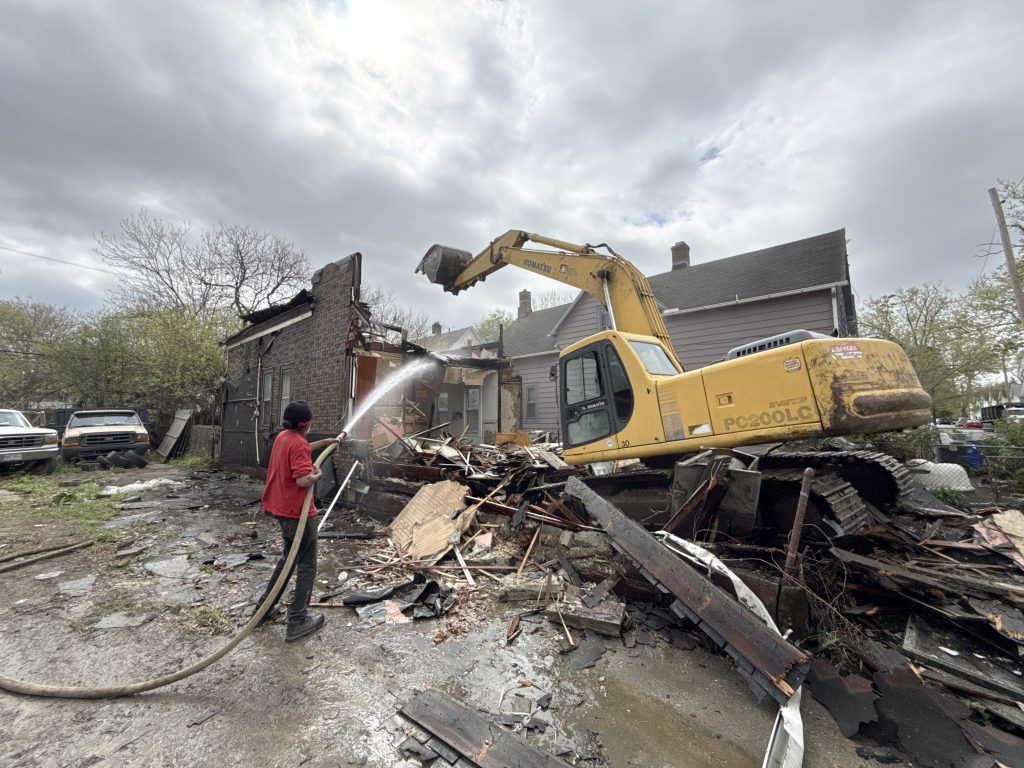
The mission of Cuyahoga Land Bank is rooted in a simple but powerful idea: return distressed and abandoned properties to productive use. While renovation is often the preferred path, the reality is that not every structure can – nor should – be saved. In those cases, strategic demolition becomes one of the most important tools we have to stabilize neighborhoods, protect residents and unlock future opportunities.
Demolition is not about tearing down; it is about making way. It removes hazards, eliminates blight, restores confidence and creates the conditions necessary for reinvestment. Across Cuyahoga County, this work has transformed long-neglected properties into assets that can once again serve communities.
Demolition as a Catalyst for Economic Growth
One of the clearest examples of demolition’s impact is the former industrial site at 19701 S. Miles Road in Warrensville Heights. At the request of the City, the Land Bank stepped in to acquire a tax-foreclosed property that had become a liability. The building was obsolete, underutilized and no longer viable for redevelopment in its existing form.
Through strategic demolition, the site was cleared and repositioned for new use. Today, that land is home to a Heinen’s manufacturing facility, a transformation that represents jobs, investment and renewed economic activity. What was once a burden is now a productive contributor to the local economy.
“The strength of Cuyahoga Land Bank is in its ability to improve communities through a focused vison of neighborhood revitalization by partnerships that have a unified strategy to eliminate obstacles and blight by making land productive once again,” said Warrensville Heights Mayor Bradley D. Sellers.
This is the essence of Cuyahoga Land Bank work: identifying when a structure has reached the end of its useful life and ensuring the land beneath it can once again serve the community.
Removing Blight, Restoring Opportunity
Few sites illustrate the scale and importance of demolition better than the former National Acme facility at Coit Road and Kirby Avenue in Cleveland. Once a major employer, the property sat vacant for decades, becoming both an eyesore and an environmental concern for surrounding neighborhoods.
“The Land Bank, alongside local and state partners, has led efforts to demolish and remediate the site – transforming it into a shovel-ready location for future development,” said Adam Stalder, Cuyahoga Land Bank Director of Community Stabilization. “Community leaders have described the project as a symbol of hope and progress, emphasizing its potential to attract investment and create jobs.”
This work is not just about aesthetics. Long-abandoned industrial properties often carry environmental hazards that prevent reuse. By clearing these sites, barriers to development are removed and opportunities are created for new industries, housing and community amenities. In fact, projects like Acme are expected to support significant job creation and long-term economic revitalization.
Protecting Residents and Stabilizing Neighborhoods
Demolition also plays a critical role in protecting the health and safety of residents, particularly in communities burdened by large, unsafe structures. The Huron Place apartments in East Cleveland are a current example.
Long vacant and deteriorating, the building has posed ongoing challenges for the city and its residents. In 2026, local officials finalized a plan in partnership with the Land Bank to move forward with demolition, with work expected to begin soon.
This project reflects a broader truth: leaving severely distressed properties standing can perpetuate instability. Vacant buildings often attract illegal activity, depress surrounding property values and strain municipal resources. Removing them is a necessary step toward restoring neighborhood confidence and creating a safer environment.
As seen in past East Cleveland projects, large-scale demolition efforts can provide immediate relief to residents while assembling land for future housing or commercial development, turning areas once defined by abandonment into places of possibility.
A Strategic Tool—Not a First Resort
At the Land Bank, demolition is never the starting point. It is used thoughtfully and strategically, only when rehabilitation is not feasible. But when it is needed, it is incredibly effective.
Across Cuyahoga County, demolition has helped remove thousands of blighted structures, paving the way for redevelopment, increasing property values and improving quality of life. It is a critical part of a broader toolkit that includes renovation, land assembly and partnerships with municipalities and developers.
From Blight to Bright Futures
Every demolition tells a story, not of loss but of transition. It marks the moment when a property stops being a liability and starts becoming an opportunity.
From Warrensville Heights to Cleveland to East Cleveland, these projects demonstrate that community stabilization often begins by clearing the past to make room for the future. Whether it’s a new manufacturing facility, a job-ready industrial site or safer neighborhoods, the outcomes are tangible and lasting.
