
Cuyahoga Land Bank’s Targeted Revitalization in Warrensville Heights Spurs Private Investment
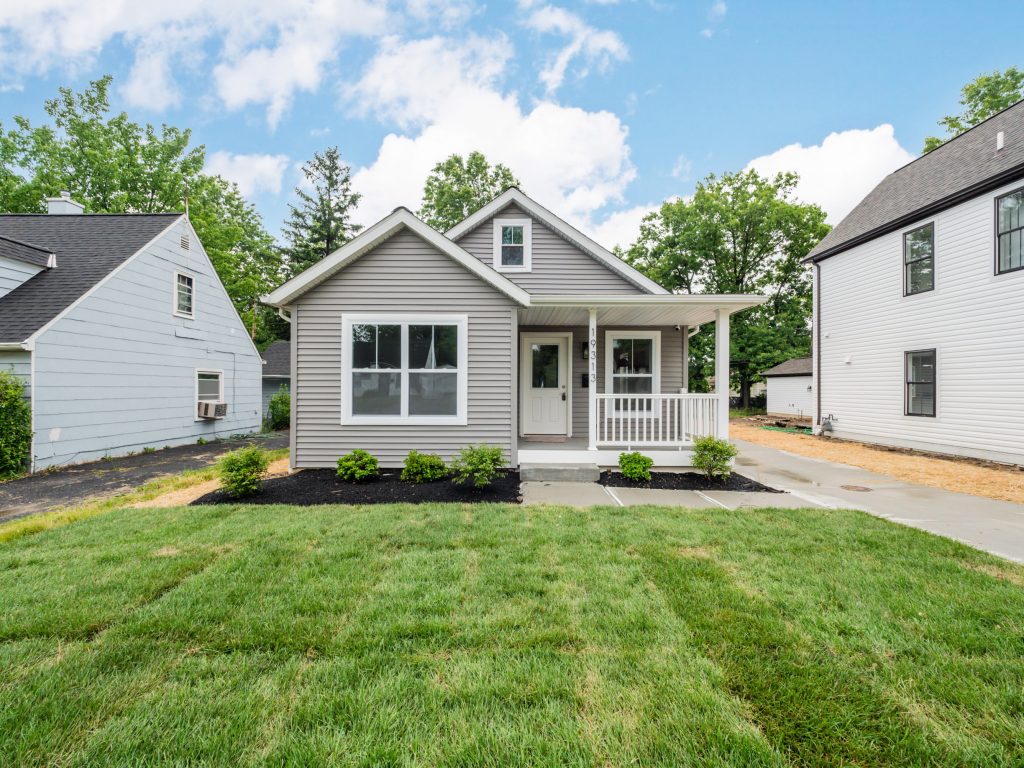
The Warrensville Heights housing market surges after strategic Cuyahoga Land Bank development.
The city of Warrensville Heights has seen housing value surge, over the last five years – brought on in no small part by a Cuyahoga Land Bank program to revitalize suburban real estate markets.
The most recent Cuyahoga County sexennial reappraisal in 2024 found median home value throughout the southeastern suburb increased on average 32%, and the city’s median property value went from $111,200 to $121,100 – about a 9% increase across the board.
The spark that helped guide what had been a lethargic residential housing market began with a Cuyahoga Land Bank program designed to jumpstart housing suburban markets experiencing challenges like population and industrial losses.
“We targeted areas throughout Warrensville Heights close to community and commercial anchors – like schools, hospitals or industry,” Cuyahoga Land Bank Chief Strategy Officer Dennis Roberts explained. “We wanted to work in a weaker housing market, jumpstart it and move out to make way for private investors.”
The Land Bank, using County Housing Program funds and parcel-level housing data, went to work evaluating tax delinquent, vacant and privately-owned properties located in those neighborhoods close to the city’s viable commercial centers.
Land Bank housing data allowed specific streets and parcels to be analyzed for the highest impact properties to construct new housing.
“Three streets were identified as the area where a concentration of new market rate housing would have the most impact,” Roberts said. After acquiring the properties, three new single-family homes were built – using a combination of modular and traditional stick-build construction.
The new single-family homes were sold at a loss to Land Bank, however the higher-than-median home sale prices proved to private developers that market rate housing in Warrensville Heights can be successful.
“With rising material and labor costs, it has become increasingly difficult to build affordable homes in depressed markets,” Roberts said. “But by providing examples of viable modern housing in these areas, it spurs on private development.”
The Land Bank’s efforts have paid off. The three-home construction, which began in 2022, was the springboard subsequent partnership between Warrensville Heights and GLH, LLC to bring more than a dozen single-family homes built on city-owned vacant lots.
The proposed 15 concrete-paneled homes, partially constructed off site, are expected to sell in the mid-to high-$200,000 – currently above the city’s average home price – and come with a 15-year, 75% property tax abatement.
Building on the success of the vacant lot development program, the Land Bank moved from construction to financing, offering a Housing Construction Gap Grant to smaller real estate developers to cover construction costs versus appraisal value-funding gaps in distressed markets.
“We wanted to test if building three high-quality homes in one strategic and targeted neighborhood would catalyze more new construction. This will also determine the best tool the Land Bank can use to create the biggest ripple throughout the market. If it doesn’t spur change, it does not make sense,” Roberts said.
The wave of new development, including a plan to add new senior-housing in the city for the first time since 2006, proves that small but targeted investment by the Land Bank can stimulate private investment and help solve one of the county’s most challenging housing market problems.
