
Building a Healthier, More Affordable Future: Why Green Efforts Matter in Community Development
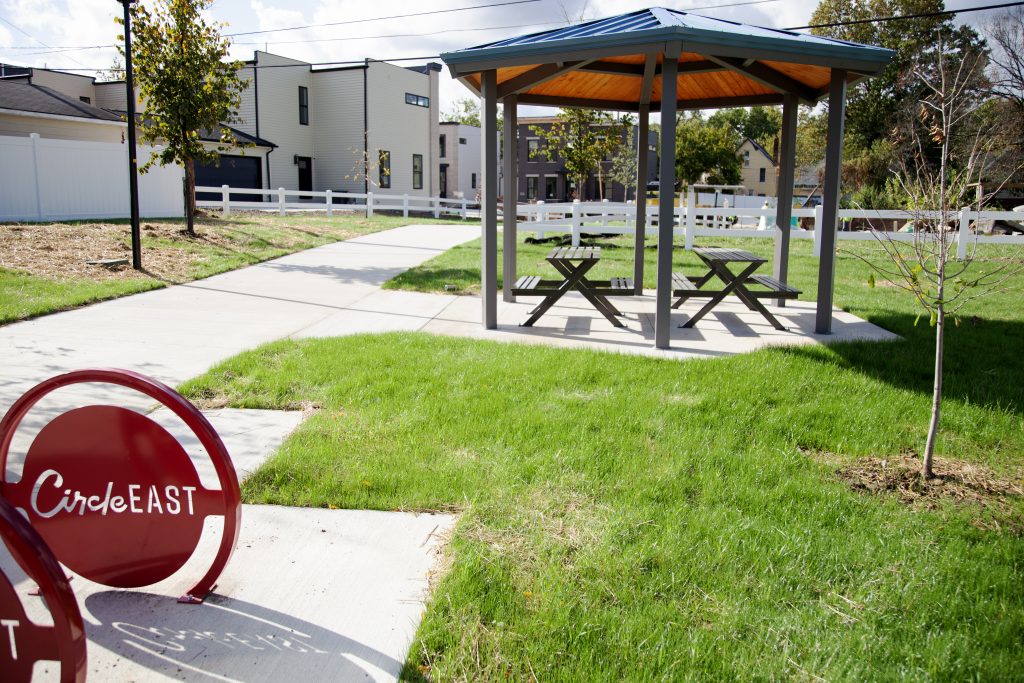
As communities across the country grapple with rising housing costs, aging infrastructure and public health challenges, one solution continues to rise to the top: green, sustainable development.
Cuyahoga Land Bank has seen firsthand how environmentally responsible building practices don’t just benefit the planet, but also create stronger, healthier and more economically resilient neighborhoods. A leading example of this approach in action is the Circle East District in East Cleveland, where sustainability and community revitalization go hand in hand.
Why Green Development Matters
Green development is not just an environmental choice. It is a practical, people-centered strategy for community growth, offering:
Lower Costs for Residents and Communities: Energy-efficient homes reduce utility costs, making housing more affordable over time. Green homes typically use 20 to 30% less energy and water, translating into meaningful monthly savings for families. These savings are especially impactful in communities where housing affordability is already a concern.
Economic and Environmental Perks: Sustainable construction reduces energy consumption, water use, and waste. At the same time, it lowers operating costs for homeowners and property managers, proving that what’s good for the environment is also good for the economy.
Improved Public Health: Indoor air quality plays a critical role in overall health. Green homes prioritize ventilation systems, non-toxic materials, and moisture control, all of which reduce exposure to pollutants that can lead to asthma, headaches, and other health issues. Considering Americans spend about 90% of their time indoors, these improvements are essential.
Stronger, Healthier Communities: Walkable neighborhoods, access to public transit and shared green spaces all contribute to healthier lifestyles. Sustainable infill development (building within existing neighborhoods) supports these outcomes while making efficient use of infrastructure.
Long-Term Community Value: Green buildings tend to maintain higher property values, require less maintenance, and contribute to neighborhood stability. They also strengthen resilience against future environmental and economic challenges.
Circle East District: A Model for Sustainable Development
The Circle East District demonstrates how thoughtful, green design can transform a neighborhood. By integrating cutting-edge building practices and community-focused planning, this development sets a new standard for what equitable, sustainable housing can look like when they feature:
High-Performance Building Envelopes: Homes in Circle East are built with enhanced insulation, air sealing and energy-efficient windows and appliances, all of which offer:
- Reduce heating and cooling demand
- Improve indoor comfort and air quality
- Prevent moisture issues like mold that can lead to health problems
Solar-Ready and Solar-Equipped Homes: Solar panels reduce reliance on the grid and lower energy costs for homeowners. In some cases, residents can even generate excess energy and benefit financially, with incentives helping offset installation costs.
All-Electric Design: By eliminating gas appliances, Circle East homes promote:
- Healthier indoor air, reducing exposure to carbon monoxide and nitrogen dioxide
- Cleaner outdoor air, by limiting emissions vented outside
- Greater efficiency, with heat pumps that are up to three times more efficient than traditional systems
Neighborhood-Wide Sustainability: Circle East goes beyond individual homes to create a cohesive, sustainable community, as it features:
- Walkable streets and shared green spaces
- Efficient stormwater management
- Proximity to transit, jobs, and amenities
- Infill development that leverages existing infrastructure
Homes Built to High Standards: Cuyahoga Land Bank-developed homes incorporate rigorous green standards, including:
- Enterprise Green Communities certification
- Energy Star appliances and systems
- Solar panels and EV chargers
- All-electric heating, cooling and appliances
- Advanced ventilation systems
- Low- or no-VOC materials and asthma-free products
- Water-conserving fixtures
These features work together to create homes that are not only efficient, but also healthier and more durable.
Expert Perspectives
Bill Sanderson, Principal at Team WS, underscores the broader impact of building to higher standards like the National Green Building Standard: “There are many causes of the lack of affordability for new housing, but there are also many potential solutions. Building to the National Green Building Standard potentially helps with insurance risk rating, but also water and energy efficiency can be increased (lower utility bills) and improved indoor environmental quality leads to healthier lives and lower health insurance rates.”
From the Cuyahoga Land Bank’s perspective, these benefits are not theoretical, as they’re already being realized in developments like Circle East. Michelle Thomas, Housing Development Project Manager at Cuyahoga Land Bank, highlights the real-world impact: “Green building isn’t just about sustainability, but also stability. When we invest in energy-efficient, healthy homes, we’re lowering monthly costs for families while creating spaces that truly support their well-being. Developments like Circle East show that we can build smarter and more equitably. By combining green technology with thoughtful neighborhood design, we’re not just constructing houses, we’re strengthening entire communities for the long term.”
A Blueprint for the Future
Green community development offers a powerful path forward, one that addresses affordability, health and environmental responsibility all at once. The Circle East District stands as proof that with the right approach, we can build communities that are not only sustainable, but also thriving, inclusive, and resilient.
