
LAND BANK 101: Meet Community Stabilization Team Member Vince Adamus
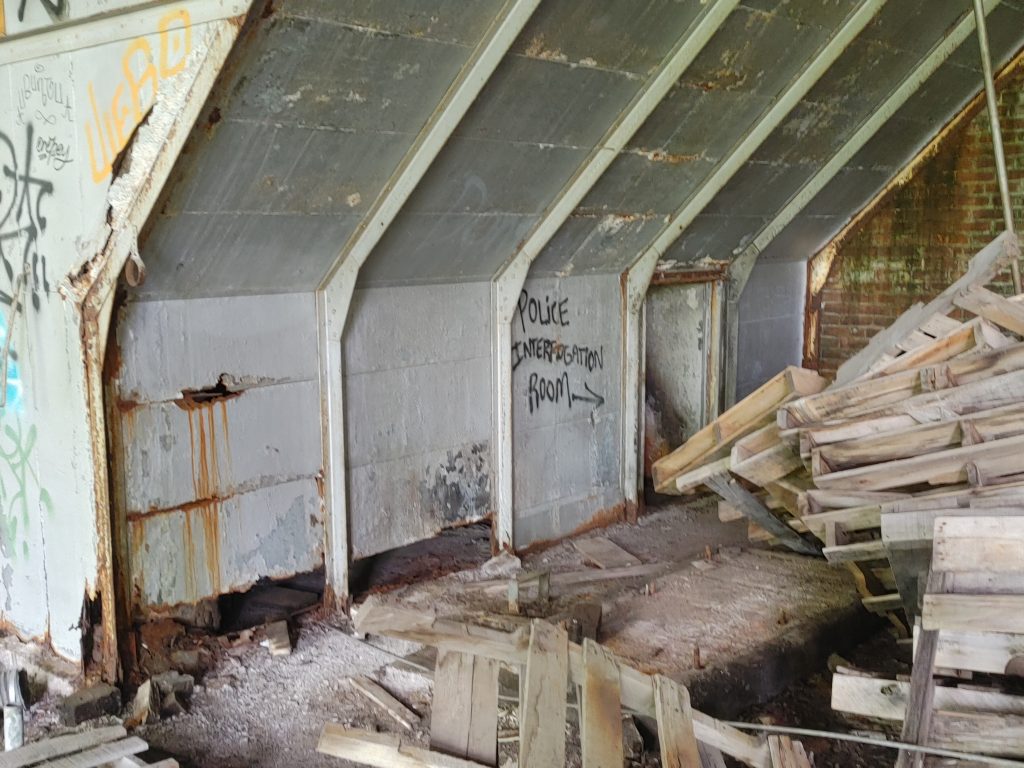
The Cuyahoga Land Bank and staff do the type of community development work that often doesn’t receive a lot of fanfare.
The newly-launched, Land Bank 101 ‘Meet the Team’ series seeks to pull back the curtain on the people working every day on a mission to return land to productive use, reduce blight, increase property values, support community goals and improve quality of life.
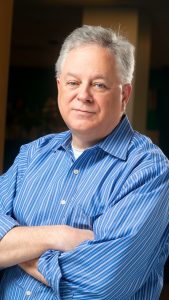
In this first installment, Vince Adamus discusses his job as Environmental Project Manager and explains just what he does and why it’s critical to the Land Bank’s overall mission.
Meet Vince Adamus – he considers himself a Clevelander after his wife lured him here from Chicago more than 30 years ago. After decades of working in economic and community development in and around Greater Cleveland, in 2024 he joined the Land Bank.
Today he manages the Land Bank’s growing number of commercial brownfield projects. Over that last few years, former industrial properties have received significant state and federal funding, Adamus explains. The goal is to remediate land left with the lasting effects that come as a result of Cleveland’s robust manufacturing history.
Adamus explains that in and around Cleveland there are properties with everything from traces of radiation, mustard gas, asbestos to the ubiquitous lead but it means his work is, “personally fulfilling and significant because we are addressing real community problems.”
Adamus answered a variety of questions about what he does as the Environmental Project Manager at the Land Bank.
Q: What is it that you do at the Land Bank?
Adamus: The Land Bank, historically, had not been big in the brownfield and commercial property arena, but some funding opportunities arose, and my job was created to manage projects that revitalize blighted properties and create large re-developable sites. The Land Bank might manage the remediation, even if it’s not our property, and with these types of grants there is a lot of required reporting.
Q: What does a typical day look like for you?
Adamus: Because Cleveland was on the forefront of industrial manufacturing, there are all types of pollutants left behind from those processes.
Environmental regulations really didn’t kick into high gear before the early 70s and the aerospace, automotive, manufacturing and defense technology industries produced a lot of metal parts and processes that required oil and cleaning solvents – so there is a lot to clean up.
Some of those companies left town and others have gone out of business, meaning there was no funding to take care of what was left behind.
I’m generally overseeing the grant portion of things, but when I’m not doing the day-to-day project management in the office, I get to go into the field.
I have the bright, shiny vest so I don’t get run over by the construction vehicles and steel-toed construction boots. When I’m out, I find all sorts of interesting things. Recently, I toured a long-vacant factory, that now the Land Bank owns, where a scene from one of the Avenger movies was shot. It is on the East Side where the interrogation scene with Scarlett Johansson (from the Winter Solider) was filmed.
Q: What is the most interesting part of your job?
Adamus: One time I visited a company, where the owner told me that the property had been used to make battleship guns in World War II and had 70- or 80-feet tall ceilings and rail lines that came directly into the building. You don’t see places like that anymore. The Land Bank now owns that property.
Q: Do you have any good stories?
Adamus: Currently, I’m managing the former National Acme property. There was a three-story manufacturing building on the south side, and when we walked out of the floor level onto the property, we stepped off the concrete onto what we thought was the natural ground. It was actually four to six feet of garbage. It looked like dirt; there was foliage growing on it and it felt like we were walking on the ground but it was compacted trash.
Q: Why do you think your Land Bank work is important?
Adamus: First, the work I do is very personally fulfilling.
We are taking care of real problems out there and putting these properties back into use. Cuyahoga County is essentially a built-out, and we have to compete for business with outlying counties that have open greenfields for development.
What we’re doing is essentially creating shovel ready sites and creating development sites of scale for the region. We’re the front end of the funnel – obtaining the parcels and remediating them. No other land bank is doing this on our scale or level of activity.
Q: Here’s a fun question – What is your favorite building?
Adamus: There is a hotel at the corner of Carnegie Avenue and Stokes Boulevard – the Tudor Arms. It is an example of 1930s Gothic Revival. I’m attracted to masonry buildings, coming from Chicago. Chicago had neighborhoods like Cleveland that for decades were neglected, abused and run down, but there has been a revival of the building stock – the brick or brownstones are now functional housing.
Q: What is the biggest DIY project you’ve ever attempted or finished?
Adamus: When we moved into our house in Highland Heights, it was covered in wallpaper. I hate wallpaper, and every room was wallpapered, including the first floor bathroom. It had such gaudy, shiny, multi-colored wallpaper that it scared the kids. We spent a lot of time getting rid of all of it, and it was worth it.
Q: Finally – What social media do you use, and do you lurk or post?
Adamus: It is LinkedIn for work and Facebook for personal activities. I think it is important to separate work and personal life because, as I get older, I have opinions.
